
Our pain management doctors in New York accurately diagnose what’s triggering your hip pain. They rely on the most advanced diagnostic equipment and fast, accurate laboratory testing to arrive at a correct diagnosis to recommend the best treatment for hip pain based on the actual cause.
Hip Pain Treatment
Effective treatment begins with an accurate diagnosis. While minor hip pain often responds to rest, ice, and elevation, your specialist may recommend physical therapy or the following clinical interventions for more complex injuries:
- Corticosteroid injections. The injection of a corticosteroid into your joint reduces inflammation and pain and may be used to treat several types of hip problems. For example, hip injections may be used as a form of hip tendonitis treatment or to relieve inflammation of the bursae.
- Assistive devices. An assistive device, such as a walker or cane, helps reduce the pressure you place on your hip area, giving it time to heal correctly.
- Compression wrap. Wrapping your hips tightly is a method of hip flexor pain treatment.
- Radiofrequency ablation to treat hip pain and inflammation in the hip. Its works by denervation of nerves of the hip joint is a minimally invasive neurotomy technique that can provide pain relief in patients with chronic hip pain.
Common Hip Injuries
As a primary weight-bearing joint, the hip is highly susceptible to injury during daily activities and sports. Traumatic events, such as falls or motor vehicle accidents, often result in fractures, dislocations, or labral tears, especially in patients with osteoporosis. These structural damages inevitably lead to acute or chronic hip joint pain.
Some common hip injuries include:
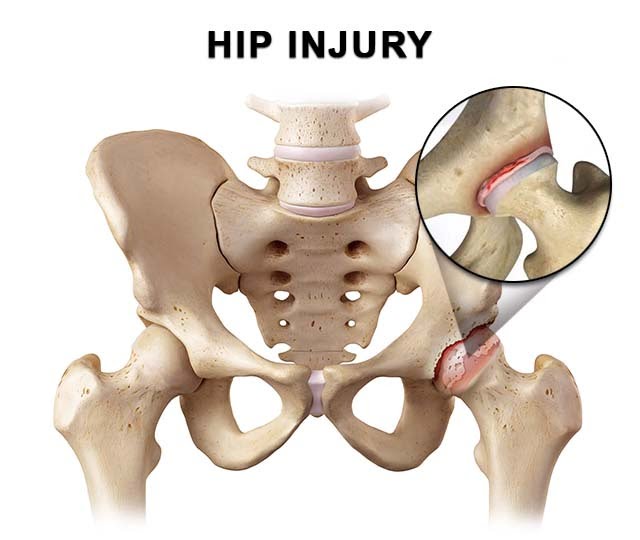
- Hip flexor injury. Hip flexor muscles extend from your hips to your knees. Stretching or tearing these muscles happens because of overuse or trauma. This type of injury may cause swelling, muscle weakness, and a reduced range of motion. A hip injury doctor can evaluate the severity of the condition and recommend the most effective treatment.
- Hip labral tear. A labral tear is a damage to the cartilage that lines the outer rim of your hip socket. This can be triggered by overuse or an accident that injures your hip.
- Hip tendonitis. A frayed or torn tendon in your hip can cause tendonitis and inflammation of a tendon. Hip flexor tendonitis can be caused by a sudden injury or by repetitive motion over time.
- Snapping hip syndrome. You may have this syndrome if you experience a snapping sensation in your hip, accompanied by pain or audible noise. It’s often the result of repetitive movements such as running or ballet dancing, although it’s sometimes caused by injury. Seeing a hip injury specialist ensures you get an accurate diagnosis and targeted treatment to restore mobility.
 Medically Reviewed by Dr. Leon Reyfman, MD, FIPP, RPh
(Pain Management Doctor)
Medically Reviewed by Dr. Leon Reyfman, MD, FIPP, RPh
(Pain Management Doctor)