
Elbow pain may be localized in one area or radiate down the forearm toward the wrist. To determine the cause, you need an elbow specialist who uses the latest diagnostic tools and advanced treatments. The elbow pain specialists at our pain management center take a comprehensive approach to identify the optimal combination of treatments for your specific condition.
The most common cause of elbow pain is overuse and repetitive motions related to work, sports, or hobbies. Unlike other joints, the elbow is less prone to arthritis. However, injuries from direct impact can lead to bone spurs or fractures. If you’ve injured your elbow, seek treatment as soon as possible.
A complex joint, your elbow provides a wide range of movement, such as reaching for objects and bringing them closer, as well as rotating your hand and forearm. Because your elbow has so many moving parts, it’s not always easy to determine the exact source or cause of your elbow injury or pain. Rely on the pain management specialists with the most advanced diagnostic equipment at the pain center.
Causes of Elbow Pain
Elbow pain is extremely common, as the joint is a place where bones, tendons, and nerves intersect intensively.
The most common causes are:

- Joint inflammation, commonly called bursitis
- Golfer’s elbow, known as medial epicondylitis, is a repetitive motion injury
- An inflammatory joint disease called rheumatoid arthritis
- Sprains from stretching or tearing of the ligaments
- Osteoarthritis
- Tendonitis
- Broken bones
- Tennis elbow, or lateral epicondylitis, another repetitive motion injury
- Injuries that result from throwing motions like baseball pitchers
- Cubital tunnel syndrome, when you stretch or put too much pressure on your ulnar nerve
Depending on the condition, you can experience the following types of elbow pain:
- Elbow joint pain
- Elbow nerve pain
- Elbow muscle pain
- Elbow bone pain
We use high-resolution dynamic ultrasound to visualize microtears and assess ligament stability in real time. This precision distinguishes simple tendinitis from complex nerve entrapments, such as cubital tunnel syndrome.
Types of Elbow Pain
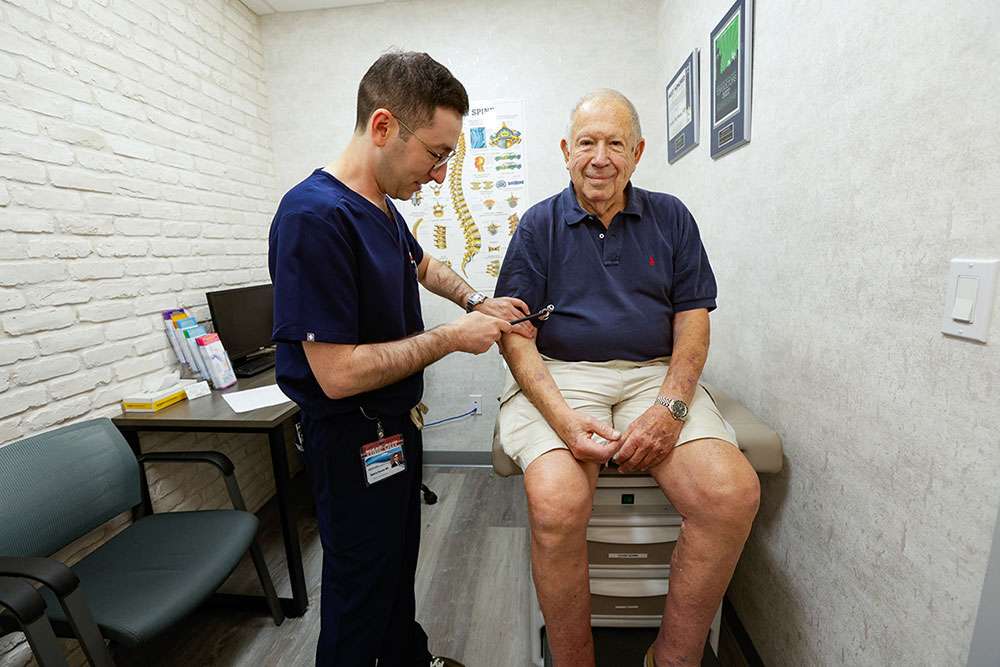
During your elbow pain treatment, you will undergo a thorough physical examination to determine the exact type of pain.
Our doctors distinguish between various pain types, including:
- Medial elbow pain. This pain occurs when the medial tendons of the elbow are exposed to internal tensile forces. It often results in overuse syndromes, such as medial epicondylar apophysitis, wrist flexor strains, and ulnar ligament sprains.
- Lateral elbow pain. Lateral pain may indicate Osteochondritis dissecans (OCD) or Panner’s Disease. This pain can be caused by repetitive microtrauma to the radio-capitellar joint and poor blood circulation in the capitellum.
- Posterior elbow pain. Common causes of posterior pain include olecranon osteochondrosis, damage to the posterior olecranon, or olecranon bursitis. Locking the elbow in full extension and repetitive forced extension can lead to apophysitis of the elbow.
Diagnosing Your Elbow Injury
Elbow pain diagnosis is based on the onset, nature, and duration of symptoms. Following an exam, our pain management doctor may use blood tests or joint fluid aspiration to identify infections, gout, or inflammatory markers like rheumatoid arthritis.
Diagnostic imaging, including X-rays, MRIs, and CT scans, identifies fractures, bone spurs, and structural abnormalities. Additionally, bone scans provide detailed visualization of soft tissue damage, cartilage irregularities, and stress fractures to determine the exact cause of your pain.
Symptoms and Treatment for Elbow Pain
At the start of most treatment plans, unless there is an obvious fracture or other underlying condition requiring immediate intervention, your doctor will begin with the least invasive options available. Once the source of your discomfort is identified, treatment is tailored to your specific elbow pain symptoms. As a QUAD A–accredited and Mount Sinai–affiliated practice, our treatment protocols follow the latest evidence-based guidelines established by the American Academy of Orthopaedic Surgeons (AAOS).
Diagnosis and treatments typically include:
- Golf elbow is not strictly relegated to golfers; it’s also common in weightlifters and construction workers. It’s inner elbow pain that extends through your forearm to your wrists and hands, causing stiffness, numbness, tingling, and weakness. Medial epicondylitis pain can be sudden or gradual. Treatment usually means you have to stop making the motions that cause the pain. Ice the inflammation until the swelling subsides.
- Repetitive motion disorder that includes elbow tendonitis, cubital tunnel syndrome, and lateral epicondylitis can happen suddenly while lifting something heavy or from repeating the same motions repeatedly. The pain hits the outer side of your elbow joint and may extend down your arm. Treatments may include splinting, although movement is necessary to prevent elbow freezing. Injections of corticosteroids are part of tennis elbow treatment to ease the pain as you heal.
- Elbow injuries. There are instances when you need to seek emergency help at Pain Management. If you notice any obvious injury, go to your nearest Emergency Room. If you can’t move your elbow normally or notice bruising, swelling, and severe pain, call your pain doctor right away. If your pain continues after home treatment or the redness and swelling increase, schedule an office visit as soon as possible. Emergency appointments are available.
What Our Patients Are Saying
Additional Treatment for Elbow Pain
Under the guidance of our experienced pain management specialists, you can take steps to continue healing and prevent the need for further treatments..
Recommendations for interventional treatment may include:
- Treating inflammation with ice or cold packs several times a day
- Wearing compression bandages to support, protect, and reduce inflammation
- Elevating your arm to help reduce swelling
- Taking over-the-counter or prescription pain relievers and anti-inflammatories
- Taking medications to treat an underlying condition, such as gout or rheumatoid arthritis
- Following physical therapy, routine to restore strength
- Protecting your elbow with pads and other equipment to avoid further injuries
- Getting a corticosteroid injection to stop the ache and inflammation
Clinical research consistently demonstrates that ultrasound-guided injections, particularly Platelet-Rich Plasma (PRP) and targeted nerve blocks, provide significantly better long-term functional outcomes and lower recurrence rates than traditional blind corticosteroid treatments.
Our specialists provide expert care for all elbow injuries. Contact our office to schedule an appointment. We are dedicated to restoring your function and helping you return to normal activities safely and quickly.
Frequently Asked Questions
What Does Physical Therapy for Elbow Pain Entail?
Physical therapy restores elbow function, improves local circulation, and stimulates synovial fluid production. We recommend static stretching and strengthening exercises to correct muscle imbalances and prevent further injury. Proper technique is essential to strengthen tendons and stabilize the surrounding musculature.
Treating elbow pain with physical therapy methods gradually involves the following improvements:
- The movement range, physical performance, and muscle strength of the arm are restored
- Elbow ache is significantly reduced
- Prevention of muscle atrophy
Before undergoing any treatment, make sure to consult a specialist in the field of elbow pain treatment.
What Are the Most Common Exercises for Elbow Pain?
Elbow pain exercises aim to strengthen and stabilize the structures that support your elbow. These include joints, muscles, and ligaments. If you have pain related to nerve, bone problems, or inflammatory conditions (rheumatoid arthritis, gout), talk to our doctor to get the best elbow pain treatment.
Physical therapists usually recommend the following exercises for elbow discomfort:
- Wrist turn. Bend your elbow at the right angle and extend the hand outwards, palm up. Twist your wrist around and hold the position for several seconds.
- Finger stretch. Put your hand palm-down on a table, straighten your fingers, and hold for a minute.
- Wrist lift. Bend your elbow at the right angle and hold a lightweight, palm down/palm up. Bend your wrist toward yourself and release.
- Elbow bend. Lower your arm to one side, bend upward and hold for a minute.
- Wrist flex. Raise the arm straight out before the body and bend your wrist upward slowly. Hold this position for 30 seconds.
When Should You See a Doctor for Elbow Pain?
You may successfully relieve elbow pain with specific self-help methods. However, you should consult your physiotherapist if the pain doesn’t go away after two weeks of self-treatment. Arrange a meeting with your physiotherapy specialist if you have tingling, weakness, and numbness in your arm.
Emergency cases include:
- Severe pain, swelling, fever, redness, and inability to move your arm
- You suspect that your elbow could be fractured
- Shooting pain in the elbow that doesn’t go away even when you’re not moving your arm
What Is the Cost of Pain Management for the Elbow?
Treatment costs depend on the selected technique, medications, and duration of therapy. Elbow support braces typically cost around $50, while steroidal anti-inflammatory drugs range from $10 to over $100 monthly. For chronic pain, steroid therapy costs vary by corticosteroid type, concentration, and dosage; for example, triamcinolone acetonide injections typically range from $15 to $100 per shot.
What Is the Best Treatment for Elbow Pain?
Immediate relief for elbow pain includes rest and 15–20 minute ice applications. Over-the-counter NSAIDs like ibuprofen or naproxen provide short-term symptom management, while targeted stretching and strengthening exercises are essential for long-term tendon rehabilitation.
 Written by Dr. Boleslav Kosharskyy, MD
(Pain Management Doctor)
Written by Dr. Boleslav Kosharskyy, MD
(Pain Management Doctor)