
Recover from neck pain, stiffness, and radiating discomfort in your arms, shoulders, or back with the latest non-surgical treatments, including trigger point and cervical facet joint injections, medial branch blocks, manual therapy, and physical therapy. An accurate diagnosis is crucial to resolving your condition. Our pain specialists have over 20 years of combined experience treating cervical spine conditions and have performed thousands of procedures, including epidural injections, facet joint injections, and minimally invasive interventions.
Complaints about cervical spine pain made up only 15% of orthopedist visits as of 2010. However, they accounted for one-third of all hospitalizations in the same year. And these figures have not decreased in recent years. Today, 5% of people with pain in the neck may become disabled or unable to work as a result of the condition. This is why you should seek medical attention to prevent serious complications at the first sign of discomfort.
Dr. Leon Reyfman, MD, is known for providing interventional pain management treatments for neck pain, including radiofrequency neurotomy (also called radiofrequency ablation) of the cervical medial branch nerves. This procedure is supported by best practice guidelines from the American Society of Pain and Neuroscience for the management of chronic neck pain and cervicogenic headache, particularly when pain is suspected to originate from the cervical facet joints. The technique involves denervation of the medial branch nerves supplying the painful cervical facet joints, and is indicated after diagnostic blocks confirm the source of pain. Relief is typically temporary, as nerve regeneration can occur, but the procedure may be repeated for recurrent symptoms.
Neck injuries are common in the United States. As many as 70% of all adults will have neck pain at some point in their lives. People seek relief from cervical or upper back pain because it limits daily activities and physical tasks.
Types of Neck Pain
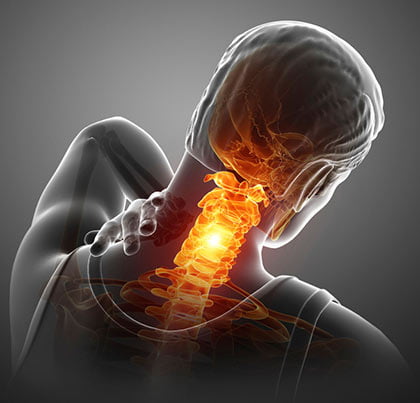
Your neck has a tough job to do. It must support your head, which weighs 10 to 11 pounds on average. It must also allow for movement, such as turning from side to side, raising and lowering your chin, and tilting each ear to your shoulder. This is the human body’s most flexible part.
Neck aches come in wide varieties. The cervical spine is the foundation of your neck. Keeping your head upright relies on four different sets of muscles, ligaments, and tendons. Any associated discomfort may feel tender, dull, sharp, and stabbing or radiate to your shoulders or other parts of your body. Chronic or constant pain can be debilitating.
Causes of Chronic Neck Pain
In addition to trauma or sports injuries, various medical conditions can cause neck pain. All of these can be treated if caught in time. If left untreated, it can develop into a chronic condition that requires more invasive treatment, including the potential controlled use of opioids. The most common causes of neck pain are:
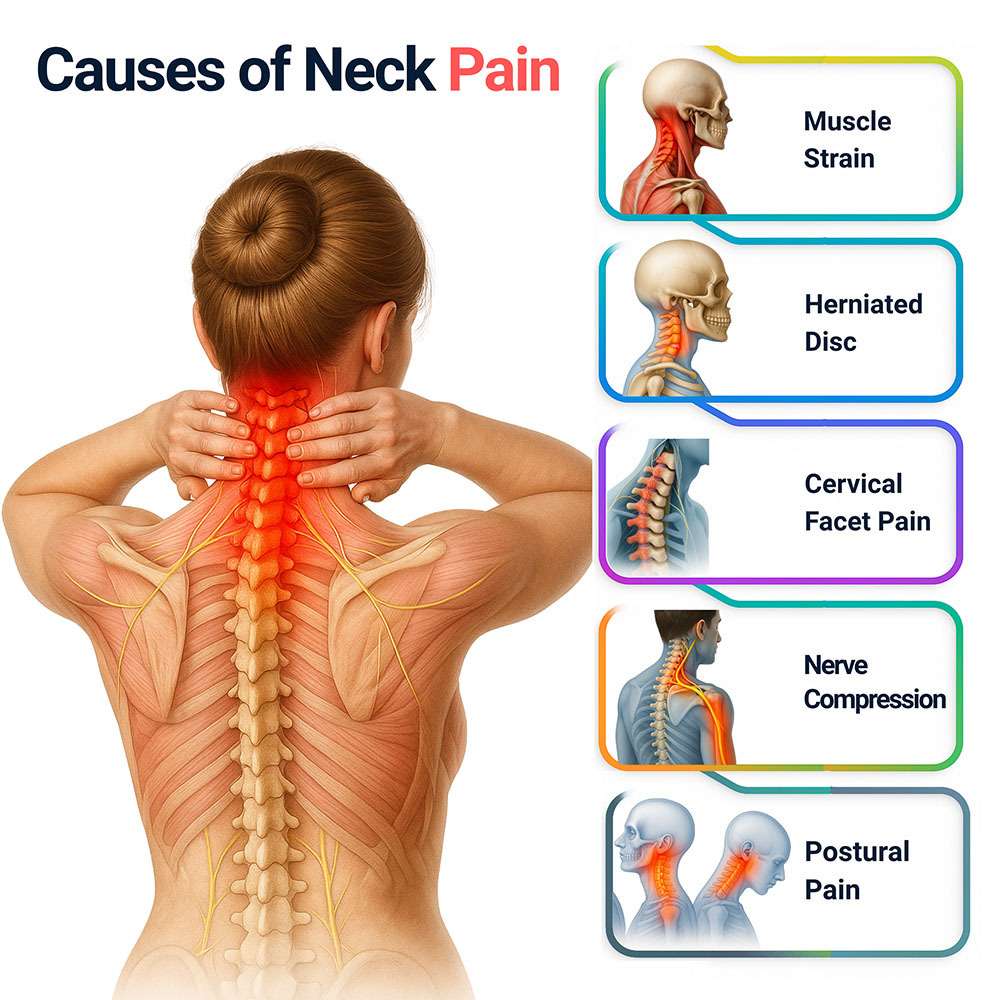
Your soreness could be due to a pulled muscle or a temporary condition caused by sleeping in an awkward position. The only way to determine if your discomfort is serious or not is to consult the best neck pain doctor at our pain clinic. You may need to undergo some tests to get a diagnosis, but once that is done, you have a number of treatment options.
What Are The Symptoms Of Neck Pain?
Symptoms of neck pain may include:
- Stiffness;
- Muscle ache;
- Limited range of motion;
- Pain radiating to shoulders and upper chest.
Neck Pain Diagnosis
Most neck problems can be accurately diagnosed through a combination of clinical expertise, hands-on evaluation, and advanced imaging technologies. Our osteopathic pain specialists have over 20 years of combined experience evaluating cervical spine conditions and have performed thousands of diagnostic assessments to identify the underlying causes of neck pain. As more information is collected, the specialist performs a physical examination that includes:
- An inspection of the back, neck, and shoulders for any visible deformity;
- Palpation of the spine and paravertebral muscles to assess muscle tone and check for tenderness;
- Spinal reflex tests to confirm normal spinal cord function;
- Muscle testing to check strength in the shoulder, arms, or hands;
- Sensory testing to check for symptoms like tingling radiating into the shoulders, arms, or fingers.
When more information is needed, your osteopathic doctor may reach an accurate diagnosis using various imaging technologies such as:
- MRI scans
- X-rays
- CT or CAT scans
- Discography
- Electromyography (EMG)
- Myelogram
- Nerve conduction studies (NCS)
Other advanced diagnostic options, depending on your specific condition, may include bone scans, ultrasound, laboratory blood tests for underlying diseases, selective nerve root injections, and cervical facet block injections.
How We Treat Neck Pain
Our approach combines expert diagnostics with the latest non-surgical treatments. By identifying the exact source of your discomfort through physical exams and high-definition imaging, we provide targeted care that helps you return to your normal routine without unnecessary delays.
Once your doctor learns the source of your pain, he can decide on the best treatment option, such as:
- Cervical epidural injection. A steroid injection right at the source of your pain reduces inflammation as it masks the pain.
- Spine facet injection. This neck pain treatment is appropriate if the cause is facet joint impingement.
- Cervical Radio Frequency Ablation If you have chronic neck pain that doesn’t respond to traditional or alternative pain treatments, radiofrequency ablation may free you from your pain problems. The radiofrequency ablation procedure is an outpatient treatment that can give you neck pain relief for up to a year or more.
Trust your NYC neck pain specialist doctor to know how to get rid of neck pain. Make an appointment in Manhattan, Bronx, or Astoria pain management center today and feel better tomorrow.
What Our Patients Are Saying
Read our patients’ reviews to learn about their experiences with neck pain treatment at Pain Management NYC:
The results depend greatly on the type of treatment, the severity of the condition, the cause of the pain, and individual characteristics. However, our patients report that their condition has significantly improved within the first few weeks of therapy.
Do you want to learn more about the neck pain treatment we offer? Would you like to set up a consultation with the team of top-rated pain experts at the our pain management clinic? For an appointment with the Midtown Manhattan pain specialist, kindly get in touch with our offices in Midtown Manhattan, the Bronx or Astoria.
 Written by Dr. Leon Reyfman, MD, FIPP, RPh
(Pain Management Doctor)
Written by Dr. Leon Reyfman, MD, FIPP, RPh
(Pain Management Doctor)