
Nerve damage can be difficult to diagnose and often requires the expertise of a dedicated neuropathy doctor. Identifying the source of nerve pain takes specialized clinical experience and advanced diagnostic evaluation. When searching for the best neuropathy doctor in New York City, patients turn to the board-certified neuropathy specialists at Pain Management NYC, who focus on hard-to-diagnose nerve conditions and provide the most up-to-date, evidence-based neuropathy treatments.
What Is Neuropathy?
Neuropathy occurs when nerves get damaged. Your nerves are like wires that carry messages from your brain and spinal cord to the rest of your body. They help you feel, move and do things. When your nerves are damaged, numbness, tingling, burning, pain, weakness or trouble with balance begin to interrupt your life.
Neuropathy can attack any part of your body, but it often affects your hands and feet more often. Neuropathy has different causes, ranging from diabetes, alcohol, medicines and infections to injuries and genes. Sometimes, doctors don’t know why some people have neuropathy.
Pain Management NYC is a full-service pain management clinic with doctors to manage neuropathy and other pain problems. This team of neuropathy doctors and pain specialists use the latest technology and the best methods available from the latest innovations in medicine.
What Causes Neuropathy?
There are different causes of neuropathy, depending on the type and location of the affected nerves. Neuropathy develops when your nerves are harmed or malfunctioning. Every part of your body is served by the nervous system, so that leaves you open to many different sources of nerve damage.
And when your nervous system is harmed, you notice things like loss of feeling, prickling, burning, pain or weakness in the area served by that nerve.
Common sources of nerve damage include:
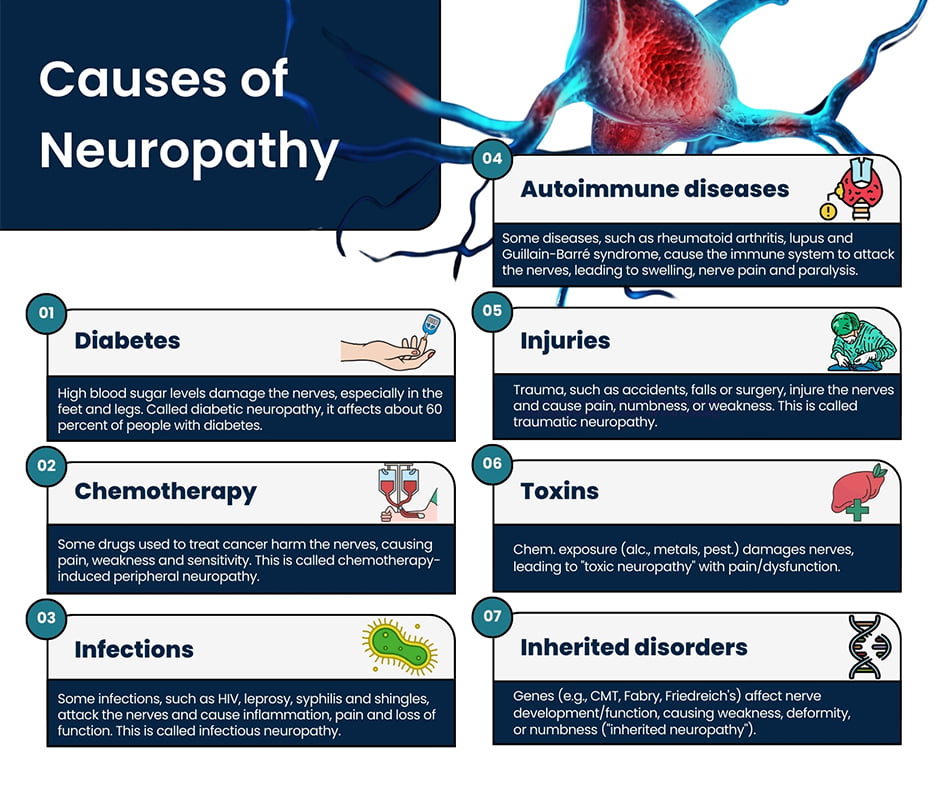
- Diabetes. High blood sugar levels damage the nerves, especially in the feet and legs. Called diabetic neuropathy, it affects about 60 percent of people with diabetes.
- Chemotherapy. Some drugs used to treat cancer harm the nerves, causing pain, weakness and sensitivity. This is called chemotherapy-induced peripheral neuropathy.
- Infections. Some infections, such as HIV, leprosy, syphilis and shingles, attack the nerves and cause inflammation, pain and loss of function. This is called infectious neuropathy.
- Autoimmune diseases. Some diseases, such as rheumatoid arthritis, lupus and Guillain-Barré syndrome, cause the immune system to attack the nerves, leading to swelling, nerve pain and paralysis. This is called autoimmune neuropathy.
- Injuries. Trauma, such as accidents, falls or surgery, injure the nerves and cause pain, numbness, or weakness. This is called traumatic neuropathy.
- Toxins. Exposure to certain chemicals, such as alcohol, heavy metals or pesticides poison the nerves and cause damage, pain, or dysfunction, creating a condition called toxic neuropathy.
- Inherited disorders. Some genetic conditions, such as Charcot-Marie-Tooth disease, Fabry disease or Friedreich’s ataxia affect the development and function of the nerves, causing weakness, deformity or loss of sensation and inherited neuropathy.
What Are the Different Types of Neuropathies?
Compression neuropathy is a nerve entrapment condition that occurs when a peripheral nerve is compressed by chronic or acute pressure. It causes pain, tingling, numbness and muscle weakness in the affected area. Common examples are carpal tunnel syndrome, cubital tunnel syndrome and tarsal tunnel syndrome.
The tibial nerve is a large branch of the sciatic nerve that runs from the lower leg to the foot. It provides sensation to the heel, sole and toes, and controls the muscles of the calf and foot. Tibial nerve injury causes foot drop, numbness, pain and weakness in the foot.
Other types of neuropathies include:
- Peroneal nerve injury. A nerve that runs along the outer side of the lower leg and foot, the nerve can be injured by trauma, diabetes or nerve entrapment.
- Ulnar neuropathy. A nerve that runs from the neck to the hand, it often gets squeezed by your elbow or wrist, causing hand and arm problems.
- Thoracic outlet syndrome. When the blood vessels or nerves in the space between the collarbone and the first rib are compressed, you may begin to have trouble with your shoulder, arm and hand on the side where the nerves are trapped.
- Polyneuropathy. This happens when multiple nerves throughout the body are damaged, causing sensory, motor or autonomic symptoms. It’s caused by diabetes, infections, toxins, autoimmune diseases or genetic disorders.
- Small fiber neuropathy. When the small nerve fibers in the skin and organs are damaged, it causes pain, numbness, tingling and autonomic problems.
- Neuropathy in feet. A common symptom of peripheral neuropathy, especially in people with diabetes, this affects the nerves in the feet.
- Neuropathy in hands. Another common symptom of peripheral neuropathy, especially in people with carpal tunnel syndrome or ulnar neuropathy. Hand neuropathy affects the nerves in your hands, which can lead to difficulty performing small tasks like holding objects, working with tools and typing.
- Complex regional pain syndrome. A rare and chronic condition that causes severe pain and inflammation in one or more limbs, this usually occurs after an injury, surgery, stroke or heart attack, but the cause is unknown.
Patients Experience
What Treatments Can I Get from a Neuropathy Doctor Near Me?
Pain Management NYC offers a comprehensive range of evidence-based neuropathy treatments in New York City. Treatment depends on the underlying cause and specific symptoms, which are carefully evaluated by experienced physicians. Neuropathy treatment may include pain relievers, anti-seizure medications, and anti-inflammatory drugs, prescribed to help reduce nerve pain, tingling, numbness, and inflammation associated with nerve damage.
Other treatments your neuropathy doctor may suggest include:
- Physical therapy, designed to improve your strength, balance and mobility. It also prevents muscle wasting and joint stiffness. Your doctor for neuropathy may refer you to a therapist who teaches you exercises, stretches and uses massage techniques to improve your nerve function.
- Nerve stimulation is a technique that uses electrical impulses to stimulate the nerves and muscles. It reduces pain, improves blood flow and enhances nerve regeneration. Different types of nerve stimulation available include transcutaneous electrical nerve stimulation (TENS), scrambler therapy, peripheral nerve stimulation (PNS) and spinal cord stimulation (SCS).
- Surgery may be required when other neuropathy treatments don’t achieve the desired results. Your neuropathy doctors recommend surgery to relieve pressure on the nerves, repair the nerve damage or remove the nerve growths. Surgery also helps you if you have complications from neuropathy, such as ulcers, infections or amputation.
- Alternative therapies are treatments that aren’t part of conventional medicine but may help some people with neuropathy. Some examples are acupuncture, biofeedback and herbal remedies. These therapies also help you cope with pain, stress and anxiety related to neuropathy.
Without the appropriate neuropathy treatments, other problems can arise, such as infections, sores, falls or losing a limb. That’s why you need to get help from a neuropathy doctor near me to provide you with an accurate diagnosis and the best treatment of neuropathy for your unique situation.
Pain Management NYC in New York provides advanced, patient-focused care for neuropathy and related nerve conditions. Treatment plans are tailored based on the cause and severity of nerve damage. If neuropathy is affecting your quality of life, schedule an appointment with an experienced neuropathy doctor at Pain Management NYC to discuss your options and expected outcomes.
 Written by Dr. Boleslav Kosharskyy, MD
(Pain Management Doctor)
Written by Dr. Boleslav Kosharskyy, MD
(Pain Management Doctor)