
A Qualified Team of Knee Pain Specialists
With their extensive knowledge and years of experience, our doctors help patients achieve optimal treatment outcomes, often leading to faster recovery. We continuously incorporate the latest medical advances while keeping patient comfort and results as our top priorities.

Leon Reyfman, MD
Board Certified
Anesthesiologist & Interventional Pain Management

Boleslav Kosharskyy, MD
Board Certified
Anesthesiologist & Interventional Pain Management

Dmitriy Dvoskin, MD
Board Certified
Physical Medicine & Rehabilitation. Interventional Pain Management

Roman Shulkin, MD
Board Certified
Anesthesiologist & Interventional Pain Management

Demetrios Koutsospyros, MD
Board Certified
Anesthesiologist & Interventional Pain Management

Mark Cohen, MD
Board Certified
Neurologist & Interventional Pain Management

Leonid Chernyak, MD
Board Certified
Anesthesiologist & Interventional Pain Management

Alan Zats, DO
Board Certified
Anesthesiologist & Interventional Pain Management.

Joseph Kim, MD
Board Certified
Anesthesiologist & Interventional Pain Management

Mohammad Ghorbanhoseini, MD
Board Certified
Anesthesiologist & Interventional Pain Management

Vitaliy Zhivotenko, DO
Board Certified
Anesthesiologist & Interventional Pain Management
Your knee provides movement and mobility while bearing the weight of your body. Because of all it does and all you put it through, it’s also susceptible to injury. Discomfort can show up in many different forms, from pain behind your knee to inner knee pain and posterior knee pain.
How We Diagnosis Knee Pain
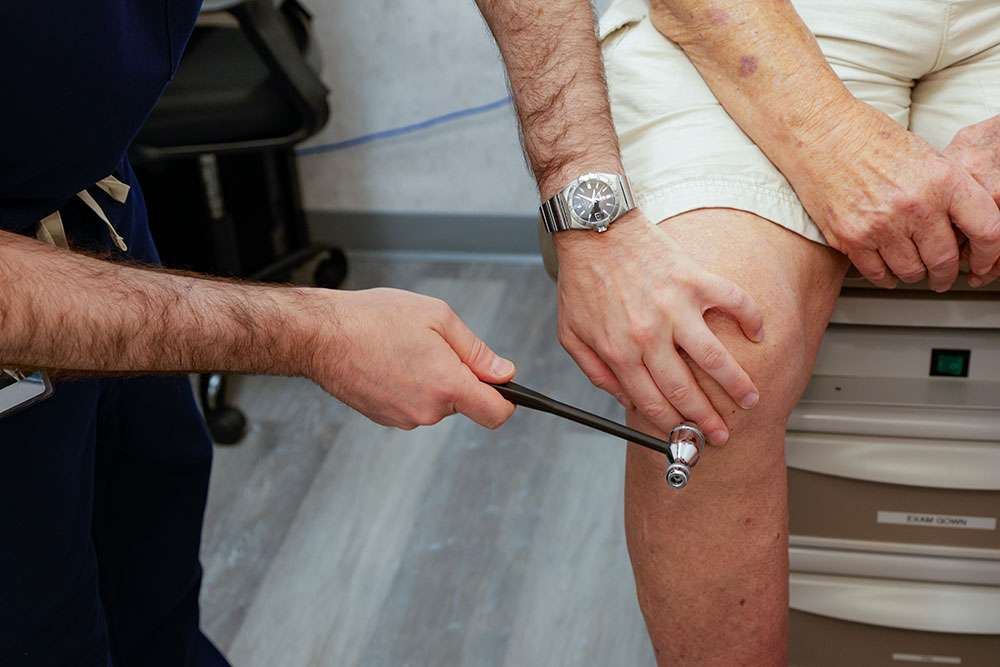
One of the first steps in diagnosing the cause of your discomfort is a physical exam. Based on this exam, your doctor can determine the source of your pain and develop an appropriate treatment plan.
For a more accurate diagnosis, your doctor may recommend additional imaging tests, including:
- Perform a physical examination to check for visible bruising, swelling, warmth, and tenderness,
- Check your range of movement by seeing how far your lower leg can move in various directions
- Assess the integrity of your knee structure by either pushing on or pulling the joint
Our doctor can diagnose the cause of your pain based on this exam and appoint the appropriate treatment plan.
Additional imaging tests may be required for a more accurate diagnosis such as:
- X-Ray – Is used to detect suspected degenerative joint disease and bone fractures.
- Computerized tomography (CT) scan – In combination with X-rays, CT scanners generate cross-sectional images that of the inside of your body and can diagnose subtle fractures and other bone problems.
- Magnetic resonance imaging (MRI) – Creates 3D images by using a powerful magnet and radio waves. It can detect injuries to soft tissues like muscles, tendons, ligaments, and cartilage.
- Ultrasound – Generates real-time images of the soft tissue structures inside using sound waves. During this test, your knee specialist may need to move your knee into different positions to establish a more accurate diagnosis.
Dr. Leon Reyfman, MD’s clinical approach to diagnosing and treating knee pain aligns with current evidence-based strategies for musculoskeletal pain management. Having treated thousands of patients over 20 years, he brings extensive hands-on experience managing both acute injuries and chronic conditions.
The diagnostic process begins with a thorough history and physical examination, focusing on onset, location, duration, quality of pain, and associated symptoms such as swelling, instability, or mechanical issues (e.g., locking, catching). The evaluation includes inspection, palpation, assessment of range of motion, strength testing, neurovascular examination, and special tests (e.g., McMurray test for meniscal pathology, provocative maneuvers for patellofemoral pain).
Board-certified in Pain Medicine and Anesthesiology and an active member of ASIPP, Dr. Reyfman develops personalized, safety-oriented treatment plans tailored to each patient’s specific diagnosis.
Around 25% of adults are affected by knee pain and over the last 20 years. Its prevalence has increased by 65%. This results in nearly 4 million people visiting a doctor each year.
Knee Pain Treatment Options
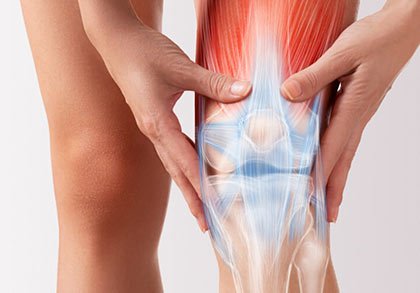
Pain Management NYC focuses on conservative, non-surgical interventions. Physiotherapy is our primary approach to resolving joint dysfunction and restoring mobility without invasive procedures.
Interventional Knee Injections
When physical therapy and medications do not provide sufficient relief, our specialists led by Dr. Leon Reyfman, offer minimally invasive knee injection treatments to reduce inflammation, improve joint function, and in many cases help patients avoid or significantly delay surgery.
Injection therapy allows medication to be delivered directly into the affected joint for targeted relief with minimal downtime. Common options include:
- Corticosteroid (Cortisone) Injections – Start working in 24 to 72 hours. Provide rapid reduction of inflammation and swelling associated with arthritis and joint flare-ups.
- Hyaluronic Acid (Gel) Injections – Also known as viscosupplementation, these injections may begin improving joint comfort within several weeks by enhancing lubrication and cushioning in patients with osteoarthritis.
- Platelet-Rich Plasma (PRP) Injections – A regenerative treatment that uses concentrated platelets from your own blood to support the body’s natural healing response in injured or degenerative knee tissues. PRP injections have a 60%–85% success rate for reducing pain for 6–12 months.
All injection procedures are performed in our office. Patients return to normal daily activities shortly after the procedure.
Knee injection therapy may be recommended for patients experiencing:
- Chronic knee pain affecting walking or mobility
- Knee osteoarthritis
- Persistent swelling and stiffness
- Pain that continues despite conservative treatment
- A desire to delay or avoid knee replacement surgery
Our board-certified pain specialists evaluate each patient individually to determine whether injection therapy is appropriate for you.
When conservative management is insufficient, we provide advanced surgical and interventional options, including:
- Arthroscopic surgery for anterior cruciate ligament (ACL) repair
- Cartilage repair and transplantation
- Robotic-assisted partial knee replacement
- Meniscus repair and reconstruction
- Total knee replacement using minimally invasive approaches
Our surgeons are skilled in arthroscopic techniques that minimize tissue trauma, robot-assisted procedures for precise alignment, and cartilage restoration techniques to preserve joint function.
All procedures are performed by board-certified pain management and orthopedic specialists affiliated with top New York City hospitals and active members of professional societies such as the American Academy of Orthopaedic Surgeons (AAOS).
Every treatment plan is customized to the patient’s anatomy, condition, and lifestyle, and individual outcomes may vary. All procedures are performed following strict safety protocols to ensure optimal recovery and long-term joint health.
 Medically Reviewed by Dr. Boleslav Kosharskyy, MD
(Pain Management Doctor)
Medically Reviewed by Dr. Boleslav Kosharskyy, MD
(Pain Management Doctor)